Quick answer
A 16-inch battery saw on a mature 56-volt or high-output 18-volt platform will handle a typical winter's homeowner firewood and storm-downed limbs, but it is not a forestry saw. Choose by the wood you cut, the bar length and the battery platform you already own.
Quick picks
- EGO Power+ 16-Inch / 18-Inch Chainsaw · Best cordless chainsaw for most yards
- Milwaukee M18 FUEL 16-Inch Chainsaw · Best if you already own M18
- DeWalt 60V FlexVolt 16-Inch Chainsaw · Best DeWalt-platform saw
- Ryobi 40V 16-Inch / 18-Inch Chainsaw · Best value cordless chainsaw
How this shortlist was made: no test farm here. We begin with the job (lot size, slope, noise limits, the battery platform you may already own), then weigh published specs, warranty terms and owner feedback that repeats over time. Retailer links can earn us a commission; see how we earn.
A cordless chainsaw used to be a curiosity: fine for pruning, underwhelming the moment the wood got serious. That is not a fair summary of the 2026 aisle. A 16-inch saw on a mature 56-volt or high-output 18-volt platform will buck a winter’s worth of typical homeowner firewood and clear a storm-downed limb without mixing two-stroke fuel on the driveway.
It still is not a forestry saw. Bar length, chain sharpness, and the battery already in your garage decide more than a “most powerful” badge. This guide starts with the wood, then shortlists machines that show up again and again for good reasons — published specs, platform fit, and the way owners talk about them after the second season.
We do not run a test farm. We will not invent a winner as if every yard had the same oak. The point is a shortlist you can actually use.
Start with the cut, not the color of the pack
Use this as a first cut:
- Pruning and the occasional 6-inch limb. A compact 8- to 12-inch battery saw, or a pole saw, is the more honest tool than a 18-inch bar you will wave over your head.
- Storm cleanup and weekend firewood in typical homeowner diameters. A 16-inch cordless saw is the default recommendation in 2026. Budget a mid-to-large pack, and a second one if the pile is real.
- Regularly bucking larger rounds, or working far from a charger all day. This is where a mid-size gas saw still earns its keep, or at least where you should be honest about owning several batteries and a sharp chain.
Bar length is not a trophy. A longer bar on an underpowered saw is how people get a pinched bar and a bad afternoon. Match the bar to the diameter you actually cut, keep the depth of cut sensible, and learn to finish a cut without burying the nose in the dirt.
Power source is the second cut. If you already mow or blow with EGO, Ryobi, Milwaukee, or DeWalt, start there. A slightly “better” saw on a lonely voltage is how garages fill with half-charged bricks — the same platform logic we use in our mower and string trimmer guides.
What actually separates a good cordless saw
Chain speed and motor control matter more than a peak-amp number on a carton. You want a saw that keeps the chain moving in a reasonably straight cut without constant bogging in seasoned hardwood. Brushless motors in the current premium and pro-battery class have closed much of the old gap.
The chain and bar as a service item. A dull chain makes any battery saw feel weak and wastes the pack. You will need to file or swap chains, keep the bar groove clean, and oil the chain every time you cut. If you are unwilling to oil a chain, you do not want a chainsaw, cordless or otherwise.
Tool-less or at least quick tensioning. A chain that loosens after the first cuts of a new loop is normal. A tool-less tensioner you will actually use is worth more than a slightly faster motor you cannot keep tight.
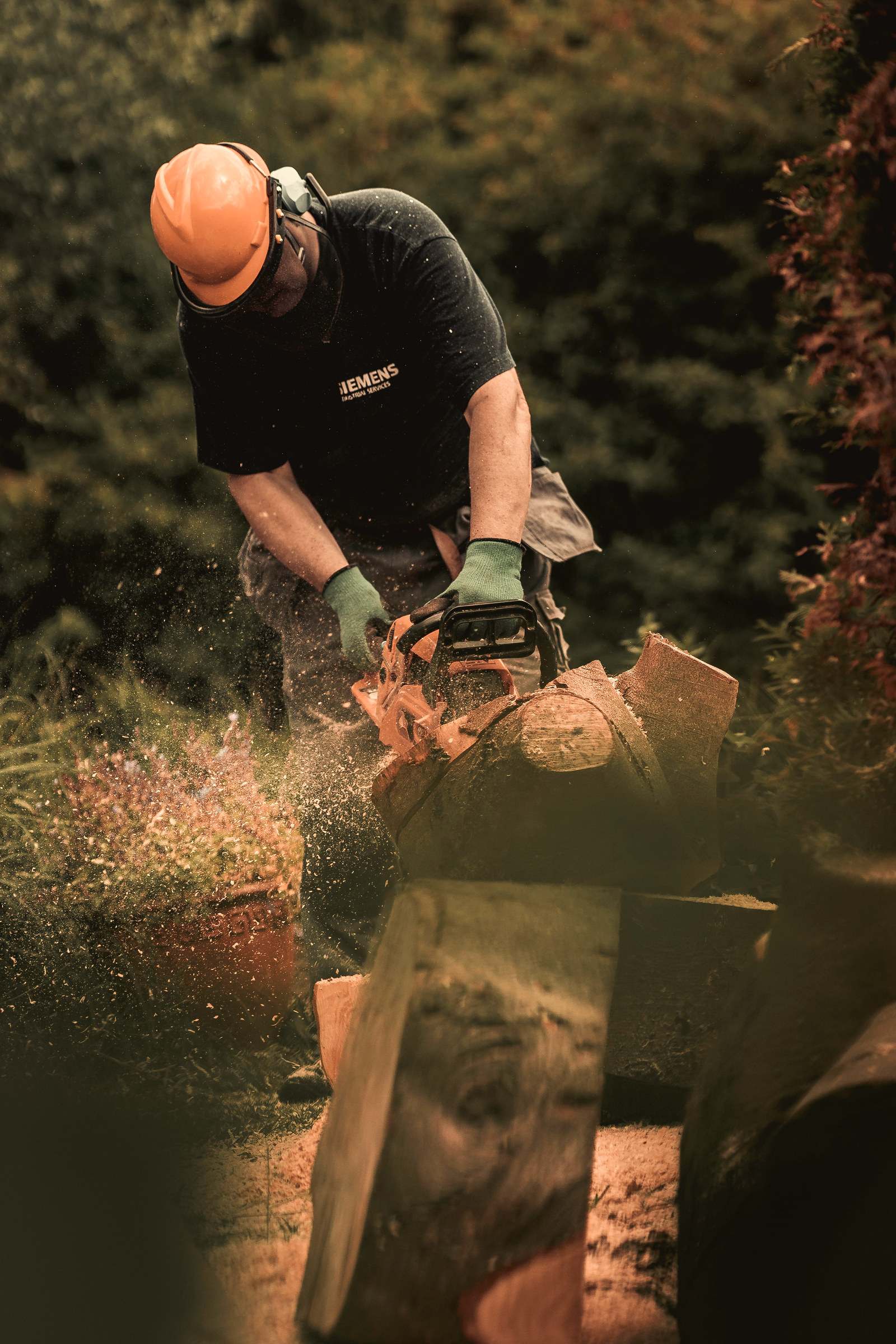
Chain brake, well placed switches, and a comfortable grip. These are not accessories. Wear a helmet or at least a hard hat and eye protection, gloves, and something stronger than tennis shorts on your legs. Hearing protection still matters; battery saws are quieter than gas, not silent.
Oil system. An automatic oiler should wet the chain without emptying a tank in ten minutes or leaving it dry. Check the oil before every session. Bar-and-chain oil is not engine oil; use what the manual asks for.
Weight and balance in your hands. A saw that feels fine on a pegboard can feel nose-heavy once the battery is locked in. If a display model exists, pick it up with a pack installed.
How we shortlisted
We favored widely available saws in the 16-inch class, on platforms a household might already own, with a realistic job description: limbs, storm wood, and modest firewood. Exact suffixes change by year and kit. The classes stay useful: a premium 56-volt all-rounder, a pro-battery 16-inch if you already live in that system, a 60-volt FlexVolt peer, and a value 40-volt kit.
A dealer-line battery saw (Stihl, Husqvarna, Echo, and their peers) can be an excellent choice if you already have that battery family or want a local service counter. We did not invent a ranked “test winner” among those; go handle them at a dealer if that is your world.
Best cordless chainsaw for most yards: EGO Power+ 16-Inch / 18-Inch class
EGO did not invent the battery chainsaw, but the 56-volt platform is the one that made a lot of skeptical gas owners try a homeowner saw and stay. The 16-inch class is the sensible default; the 18-inch class is there if your rounds regularly ask for it and you will feed the saw a larger pack. Kit pricing is not pocket change. The consolation is a battery family that already covers mowers, blowers, and trimmers, which is how the saw pays for itself over a couple of seasons.
Best if you already own M18: Milwaukee M18 FUEL 16-Inch
Do not start a second ecosystem if the garage is already Milwaukee blue. High-output M18 packs turn this into a serious 16-inch saw with a service network behind it. It is an expensive way to begin a battery family, and a very sensible way to extend one. If you only have compact M18 packs, budget a high-output battery rather than blaming the saw for a short, slow cut.
Best DeWalt-platform saw: 60V FlexVolt 16-Inch class
Yellow packs already on the shelf are a discount you will not see on the receipt. The FlexVolt 16-inch class is the homeowner firewood tool; DeWalt’s smaller 20V compact saws are better thought of as pruners and camping saws. Do not buy a compact 20V and expect it to behave like a 16-inch 60-volt machine.
Best value cordless: Ryobi 40V 16-Inch / 18-Inch class
If the garage is already yellow-and-green, or you want a kit that goes on sale at Home Depot with some regularity, the Ryobi 40V chainsaw is the practical shortlist. Cut speed and refinement sit behind the EGO and pro-battery tools, especially in dense hardwood. For limbs and modest rounds, it is plenty, especially on a mid-size 40-volt pack.
Chain care is half the performance
A sharp chain feeds itself into the cut. A dull one makes sawdust instead of chips, wanders, and cooks the battery. File it, or keep a spare loop and rotate. Learn the depth-gauge (raker) filing if you sharpen at home, or take the loop to a shop. After you hit dirt, sharpen immediately; dirt is a grindstone.
Tension the chain so it sits on the bar but can still be pulled around by hand with a glove. A loose chain derails. A tight one wears the bar and the motor. New chains stretch in the first tank of use. Check often.
Run the oiler. A dry bar is a destroyed bar. In cold weather, some oils thicken; use what the manufacturer allows and give the oiler a moment to flow before you bury the bar in a log.
Safety, said plainly
- Both hands on the saw. No one-handed “just this little branch” work.
- Do not cut above your shoulders.
- Know where the bar nose is; kickback is not a myth.
- Clear your feet and your escape path before the piece moves.
- Wear protection. A battery saw will not announce itself as loudly as a gas saw, which is not the same thing as being gentle.
- A chainsaw is not a hedge tool. For hedges, use a hedge trimmer.
If the wood is large, spring-loaded, or near power lines, or if you are standing on a ladder with a saw, stop and get help or a professional. No buying guide should talk you into a hospital visit.
Pole saws, compact pruners, and when not to buy a 16-inch
A pole saw is the right tool for a branch that is over your head and reasonably small. It is the wrong tool for firewood, and a 16-inch handheld saw is the wrong tool to lift over your head on a pole you invented from a ladder. If most of your “chainsaw” work is pruning, look at a pole saw on the same battery platform as the rest of the shed — EGO, Ryobi, DeWalt, Milwaukee, and the dealer brands all sell them — and keep a compact handheld for the pile on the ground.
Compact 8- to 12-inch “pruning saws” are genuinely handy in a thicket or on a camping trip. They are not a substitute for a 16-inch firewood saw. Read the bar length on the carton twice before you let a low price talk you into the wrong class.
Battery versus a small gas saw
A small gas saw still wins if you regularly cut larger wood, work away from a charger for hours, or already have a mix-and-pour habit and a shop that will bump-start you on a Monday. It also brings fuel, exhaust, starting rituals, and more noise.
For most suburban piles, the 2026 battery 16-inch is the more pleasant machine, and the more likely one to actually be used because it starts. If you already own the platform, the math is even kinder. If you do not, price the kit honestly — saw, mid-size pack, charger, oil, a spare chain — and compare that to a basic gas saw plus fuel gear. The cheap gas saw is still cheaper at the register. The battery saw is often cheaper in aggravation.
A buying sequence that wastes less money
- Inventory the batteries you already own.
- Be honest about the diameter and amount of wood you actually cut.
- Choose 16 inches unless you have a clear reason to go shorter or longer.
- Budget a second battery or a mid-to-large pack, plus bar-and-chain oil and a spare chain.
- Buy chaps or at least stout pants, eye protection, and gloves before you buy a decorative extra bar you will not use.
A cordless chainsaw is one of the few yard tools where the quiet start can fool you into treating it like a drill. It is still a chainsaw. Buy the one that fits the wood and the platform you have, keep the chain sharp, and it will feel like a much more expensive machine than the carton promised — which, in a garage already full of good intentions, is the kind of performance that actually matters.
The lineup, compared
| Model | Power | Bar | Best for | Typical price | Where to buy |
|---|---|---|---|---|---|
| EGO Power+ 16-Inch / 18-Inch Chainsaw Best cordless chainsaw for most yards | 56V battery | 16 or 18 in. class | Firewood, storm cleanup, pruning | Typically $250–$450 as a kit, depending on bar and battery | Check price |
| Milwaukee M18 FUEL 16-Inch Chainsaw Best if you already own M18 | M18 battery | 16 in. class | Existing Milwaukee users | Typically $250–$450 as a kit, more with high-output packs | Check price |
| DeWalt 60V FlexVolt 16-Inch Chainsaw Best DeWalt-platform saw | 60V FlexVolt | 16 in. class | Existing DeWalt users, weekend firewood | Typically $300–$500 as a kit | Check price |
| Ryobi 40V 16-Inch / 18-Inch Chainsaw Best value cordless chainsaw | 40V battery | 16 or 18 in. class | Platform buyers, lighter cutting | Typically $180–$300 as a kit | Check price |
EGO Power+ 16-Inch / 18-Inch Chainsaw
The homeowner shortlist when you want a 56-volt saw that bucks firewood and clears storm limbs without mixing two-stroke fuel. Buy the bar length that matches the wood, and budget a mid-to-large pack if the mower already shares the platform.
- Power
- 56V battery
- Bar
- 16 or 18 in. class
- Best for
- Firewood, storm cleanup, pruning
Worth it for
- Mature 56-volt platform shared with mowers, blowers, and trimmers
- 16- and 18-inch class bars cover most homeowner wood
- Tool-less or quick tensioning on current models
Think twice if
- A small pack will feel short in dense hardwood
- Not a substitute for a long-bar gas saw on big timber
Milwaukee M18 FUEL 16-Inch Chainsaw
Do not start a second battery family if the garage is already Milwaukee blue. High-output M18 packs turn this into a serious 16-inch saw with a service network behind it.
- Power
- M18 battery
- Bar
- 16 in. class
- Best for
- Existing Milwaukee users
Worth it for
- Uses M18 packs many tradespeople already own
- Strong parts and service footprint
- Comfortable for repeated weekend cutting once you have a high-output battery
Think twice if
- An expensive way to begin a battery platform from zero
- Runtime depends heavily on which pack you mount
DeWalt 60V FlexVolt 16-Inch Chainsaw
The 60-volt FlexVolt saw is the one to shortlist if yellow packs already live on the shelf. DeWalt also sells smaller 20V compact saws that are better as pruners than as firewood tools.
- Power
- 60V FlexVolt
- Bar
- 16 in. class
- Best for
- Existing DeWalt users, weekend firewood
Worth it for
- FlexVolt packs can also serve 20V tools in the same family
- 16-inch class bar for homeowner wood
- Wide retail availability
Think twice if
- Kit pricing sits in premium-battery territory
- The compact 20V models are a different, lighter job
Ryobi 40V 16-Inch / 18-Inch Chainsaw
The practical 40-volt saw if you already live in the Ryobi ecosystem or want a kit price that does not require a family meeting. Fine for limbs and modest firewood; not the most refined cutter in heavy hardwood.
- Power
- 40V battery
- Bar
- 16 or 18 in. class
- Best for
- Platform buyers, lighter cutting
Worth it for
- Approachable kit pricing and frequent Home Depot sales
- Shares 40V packs with a huge tool bench
- 16- and 18-inch class options
Think twice if
- Cut speed and chain care feel a step behind the premium 56V and pro-battery saws
- A small pack will fade faster in dense wood
Free checklist
Get the yard-tool buyer checklist
A one-page checklist for mowers, trimmers, blowers and washers, plus a deal-watch sheet. We'll email it after you confirm, then a Thursday brief.
Reader questions
- Is a cordless chainsaw powerful enough for firewood?
- For typical homeowner firewood — limb wood and rounds in the 16-inch-and-under class — a modern 56-volt or high-output 18-volt saw is often enough, especially with a second battery. It will be slower than a mid-size gas saw in dense hardwood, and it is the wrong tool for regularly bucking large-diameter logs.
- What bar length should I buy?
- Twelve to fourteen inches is a pruning and light-limb saw. Sixteen inches is the homeowner default. Eighteen inches covers slightly larger rounds if you have the battery and the technique. Buy the bar that matches the wood you actually cut, not the longest bar on the shelf.
- Can I use the same battery as my mower or trimmer?
- Often yes, and that is the hidden decision. EGO 56V, Ryobi 40V, Milwaukee M18, and DeWalt FlexVolt packs move between tools. Starting a lonely chainsaw brand is how you end up with a second charger wall.
- Are cordless chainsaws safer than gas?
- They still cut with a chain moving very quickly. The usual safety rules apply: both hands, proper stance, personal protective equipment, a working chain brake, and no cutting above your shoulders. The quieter start can make it easier to be casual. Do not be casual.
- How long does a battery chainsaw run?
- Long enough for a pile of limbs or a short firewood session on a mid-to-large pack, and not long enough if you expect all-day production cutting on a single battery. Runtime shrinks in hardwood, with a dull chain, and with a longer bar. A second pack is the practical answer.