Quick answer
For a typical home hedge, a cordless 24- to 26-inch trimmer on a battery platform you already own is the default pick. The real decisions are blade length, whether you need a pole, and whether you can reach the top from the ground.
Quick picks
- EGO Power+ 26-Inch Hedge Trimmer · Best cordless hedge trimmer for most yards
- Milwaukee M18 FUEL Hedge Trimmer · Best if you already own M18
- Ryobi 40V 24-Inch Hedge Trimmer · Best value cordless hedge trimmer
How this shortlist was made: no test farm here. We begin with the job (lot size, slope, noise limits, the battery platform you may already own), then weigh published specs, warranty terms and owner feedback that repeats over time. Retailer links can earn us a commission; see how we earn.
A hedge is a wall you are trying to keep as a wall. The tool for that job is a hedge trimmer: two toothed blades, a motor, and enough reach to stay on the ground.
People buy these as an afterthought, often after a summer of fighting the same overgrown boxwood with kitchen shears or, worse, a string trimmer. In 2026, a cordless 24- to 26-inch trimmer on a platform you already own is the default recommendation for typical home hedges. The interesting decisions are blade length, whether you need a pole, and whether the growth is actually a hedge or a small tree you are pretending is a hedge.
We do not run a test farm. The shortlist below is a set of widely available classes — a 56-volt all-rounder, a pro-battery option if you already live in that system, and a value 40-volt kit — plus the questions that matter more than a model suffix.
Handheld, pole, or both
Handheld is the right tool for the faces of a hedge you can reach from the ground, and for shaping shrubs. It is lighter, more precise, and less tiring in the arms than a pole for work at chest height.
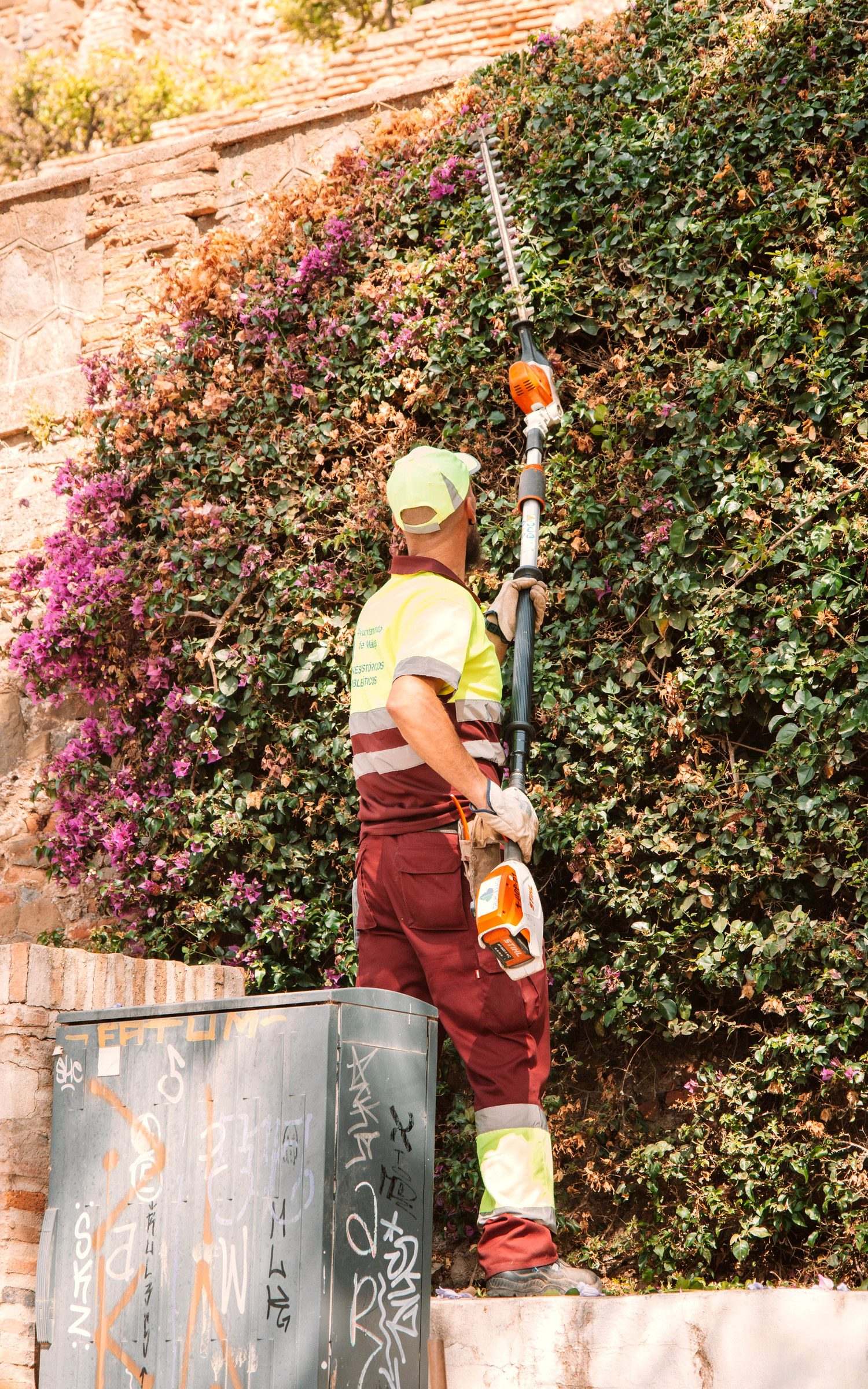
Pole or articulating is the right tool for the top and the far side of a tall privacy hedge. If you need a ladder to see the top, you need a pole, not more courage. Many platforms sell a dedicated pole hedge trimmer, a short-reach articulating shaft, or a power head with a hedge attachment. An attachment is convenient if you already like the power head; a dedicated tool is often nicer in the hands if the hedge is a regular job.
Some households reasonably own both: a 24- to 26-inch handheld for the faces, and a pole for the top, sharing a battery. That pairing is cheaper than an emergency-room visit.
Blade length, tooth spacing, and dual action
Blade length is reach and weight. A 18- to 20-inch blade is handy in tight, short shrubs. A 22- to 26-inch blade is the everyday homeowner length. Much longer than that, and you are swinging a lot of metal above your shoulders.
Tooth spacing (sometimes sold as “cut capacity”) decides how thick a branch the blade will accept. A typical residential hedge trimmer is happiest on green growth up to a certain diameter — often in the neighborhood of three-quarters of an inch, depending on the model. Woody stems thicker than that belong to loppers or a pruning saw, not to a jammed blade.
Dual-action blades, where both teeth move, usually vibrate less than a single-action design and are kinder on a long session. A rotating or articulating head is useful when you are doing the top from the ground. A scabbard or sheath is not a luxury; bare teeth in a crowded shed are a mistake.
Buy the platform first
If you already mow, blow, or trim grass with EGO, Ryobi, Milwaukee, DeWalt, or another system, start there. The hedge tool should be a citizen of that set, not a souvenir from a different aisle. That is the same advice we give for mowers and chainsaws, because the physics of a charger wall do not change.
If you are starting from zero and the hedge is the only job, a mid-range 40-volt or 56-volt kit is still a better first buy than a bargain corded unit you will hate dragging around a rectangular hedge — unless the hedge is tiny and right next to an outlet. Corded hedge trimmers remain perfectly good tools for a single short hedge near power. They are also a trip hazard and a finite leash.
Gas hedge trimmers still exist for a reason: all-day commercial work, very thick growth, and crews that already run mixed fuel. Most households will not miss them.
2026 shortlist
Best cordless hedge trimmer for most yards: EGO Power+ 24- to 26-Inch class
EGO’s 56-volt hedge tools have been the suburban benchmark for a reason: they start instantly, they share packs with the rest of a serious yard set, and the 24- to 26-inch dual-action class covers typical privacy hedges without feeling like a toy. Look at a pole or articulating model in the same family when the top of the hedge is the actual problem.
Best if you already own M18: Milwaukee M18 FUEL
Do not start a second ecosystem for one hedge. High-output M18 packs turn this into a serious cutter for denser growth, with a service network behind it. Confirm current blade length and whether a pole exists in the same family if height matters. It is a pricey way to begin a battery wall, and a very sensible way to extend one.
Best value: Ryobi 40V 24-Inch class
This is the value trimmer for homeowners who want cordless now, attachments or a pole later, and a kit price that does not require a spreadsheet. It will not feel as refined in thick, woody stems as the EGO or Milwaukee tools. For seasonal shaping of a typical hedge, it is plenty, especially on a mid-size 40-volt pack.
A dealer-line battery hedge trimmer — Stihl, Husqvarna, and their peers — can be excellent if you already have that battery or want a local shop. Handle them in person if that is your world; we will not invent a ranked lab score for a tool we have not put through a formal test.
How to cut so the hedge still looks like a hedge
Cut the sides slightly wider at the bottom than at the top, so sunlight reaches the lower growth. A hedge that is wider at the top will shade itself into a bare skirt.
Use the tip of the blade for precision and the length of the blade for the long faces. Keep the teeth moving; do not stall them in a thick stem. If a branch is too big, stop and use loppers. Forcing it is how teeth bend.
For the top, keep the blade as level as you can, or use a string line if you are particular. A pole tool is better than a ladder. Take off a little at a time; you can always cut more, and you cannot uncut a hole.
Leave formal hedges alone in late summer or early fall in climates where new growth will not harden before a freeze, and follow the pruning season for the species you actually have. A buying guide is not a substitute for a pruning calendar, but “shear it whenever I am angry” is not a species-specific plan either.
Wear eye protection. Wear gloves. Do not reach into the teeth to pull a jammed stem while the battery is installed. Remove the pack first. The quieter cordless motor makes it easier to forget that the blades are still a machine.
Maintenance that keeps the cut clean
Hedge-trimmer blades live in sap. Wipe them down after a session, and use a little light oil or a blade-care spray so the next start is not a sticky fight. If the teeth are nicked or rolled, have them sharpened or replaced rather than forcing a ragged cut that browns the hedge. A dull hedge blade does the same kind of tearing a dull mower blade does, just vertically.
Check the blade bolts or the gearbox according to the manual. Remove the battery before any of that. Store the tool in a scabbard, hanging or on a shelf, not teeth-down in a jumble of rakes.
If you only cut once or twice a year, do not leave a battery on the tool in a shed all winter. Store packs as you would a mower battery: indoors, mid-charge, dry.
Common mistakes
- Buying a handheld because it is cheaper, then climbing a ladder anyway.
- Using the trimmer as a branch saw. Loppers exist.
- Cutting a hedge into an inverted pyramid that shades its own feet.
- Letting the tool sit sap-covered until the blades are glued together.
- Starting a new battery family for a single hedge when a perfectly good pack already sits on the mower.
A hedge trimmer is a modest machine that makes a big visual difference when it is the right length, on the right battery, and used from the ground. That is a better definition of “best” than a peak-stroke number on a hanger card.
A buying sequence that wastes less money
- Measure the hedge: height, thickness, and whether you can reach the top from the ground.
- Inventory batteries you already own.
- Choose handheld, pole, or both.
- Pick a 22- to 26-inch class blade unless the shrubs are small.
- Buy a scabbard, and if the hedge is tall, the pole, before you buy a decorative second color of the same handheld tool.
If you are building a set this season, put the hedge trimmer on the same platform as the mower and the string trimmer. The faces will look cleaner, the charging shelf will look calmer, and you will stop asking a weed-eater line to do a job it was never good at. That is the whole point of a hedge tool: to make a wall look like you meant it.
The lineup, compared
| Model | Power | Blade | Best for | Typical price | Where to buy |
|---|---|---|---|---|---|
| EGO Power+ 26-Inch Hedge Trimmer Best cordless hedge trimmer for most yards | 56V battery | 24–26 in. class | Typical home hedges, EGO owners | Typically $180–$280 as a kit | Check price |
| Milwaukee M18 FUEL Hedge Trimmer Best if you already own M18 | M18 battery | 18–24 in. class, model-dependent | Existing Milwaukee users | Typically $200–$350 as a kit | Check price |
| Ryobi 40V 24-Inch Hedge Trimmer Best value cordless hedge trimmer | 40V battery | 22–24 in. class | Typical hedges, value kits | Typically $120–$200 as a kit | Check price |
EGO Power+ 26-Inch Hedge Trimmer
A 56-volt, dual-action 24- to 26-inch blade is the default shortlist for typical privacy hedges. Look at a pole or articulating model in the same family when the top of the hedge is above a comfortable reach.
- Power
- 56V battery
- Blade
- 24–26 in. class
- Best for
- Typical home hedges, EGO owners
Worth it for
- Shares EGO 56V packs with the rest of a yard set
- Dual-action blades reduce vibration on longer sessions
- Pole versions exist when height is the real problem
Think twice if
- A handheld unit will not replace a pole tool on a 10-foot hedge
- Kit price is higher than basic 40V trimmers
Milwaukee M18 FUEL Hedge Trimmer
Extend an existing M18 wall rather than starting a lonely hedge-only voltage. High-output packs make this a serious cutter for dense growth.
- Power
- M18 battery
- Blade
- 18–24 in. class, model-dependent
- Best for
- Existing Milwaukee users
Worth it for
- Uses batteries you may already own
- Strong motor for thicker, neglected growth
- Service network is easy to find
Think twice if
- Pricey as a first M18 purchase
- Confirm blade length and whether a pole is offered in the same family if height matters
Ryobi 40V 24-Inch Hedge Trimmer
The value shaft for homeowners who want cordless hedges now and a kit that goes on sale. Plenty for seasonal shaping; thick, woody stems still favor a higher-voltage or pro-battery tool — or a pair of loppers.
- Power
- 40V battery
- Blade
- 22–24 in. class
- Best for
- Typical hedges, value kits
Worth it for
- Approachable kit pricing
- Shares 40V packs across the Ryobi bench
- Pole and articulating options exist in the same voltage
Think twice if
- Less refined in dense, woody growth than EGO or Milwaukee
- Runtime varies widely with pack size
Free checklist
Get the yard-tool buyer checklist
A one-page checklist for mowers, trimmers, blowers and washers, plus a deal-watch sheet. We'll email it after you confirm, then a Thursday brief.
Reader questions
- What blade length do I need on a hedge trimmer?
- A 22- to 26-inch blade is the sweet spot for most home hedges. Shorter blades are lighter and easier in tight shrubs. Longer blades cover more wall per pass but get heavy, especially above your shoulders. Measure the hedge, not the carton.
- Do I need a pole hedge trimmer?
- If the top of the hedge is above a comfortable reach while standing on the ground, yes. A handheld trimmer on a ladder is how people fall. A pole or articulating-shaft model on the same battery platform is the safer, if slightly less precise, tool for the top and the far side.
- Is a cordless hedge trimmer as good as gas?
- For typical residential hedges, yes. Modern 40-volt and 56-volt units cut cleanly and start instantly. Gas still makes sense for long professional days or extremely thick, woody growth, but most homeowners will not miss the mixing can.
- Should I buy a hedge trimmer on the same battery as my mower?
- Almost always. EGO, Ryobi, Milwaukee, DeWalt, and others let packs move between tools. A slightly fancier trimmer on a lonely voltage is how you collect chargers.
- Can I use a string trimmer on a hedge?
- You can, and you should not. Line shreds foliage instead of cutting it, and it is a good way to brown the face of a hedge. Use a hedge trimmer, and keep the string trimmer for the grass along the base.