Quick answer
An electric washer is the right first machine for most households: it starts instantly, stores more easily than a gas cart and is less likely to strip a finish. Shop cleaning units (pressure times flow), not the PSI on the carton, and step up to gas only for bigger jobs.
Quick picks
- Ryobi 2300 PSI Electric Pressure Washer · Best electric for driveways
- Sun Joe SPX3001 Electric Pressure Washer · Best everyday electric washer
- Greenworks 2,000 PSI Electric Pressure Washer · Best compact electric
How this shortlist was made: no test farm here. We begin with the job (lot size, slope, noise limits, the battery platform you may already own), then weigh published specs, warranty terms and owner feedback that repeats over time. Retailer links can earn us a commission; see how we earn.
Pressure washer shopping is a numbers trap. The carton shouts a PSI figure, the aisle lighting does the rest, and you go home with a machine that is either timid on concrete or far too eager on a cedar fence.
Electric pressure washers in 2026 are the right first machine for most households. They start instantly, they store more easily than a gas cart, and they are less likely to take the finish off something you meant to clean. The art is choosing enough cleaning power without pretending a 13-amp plug will replace a Honda-powered 3,200 PSI brute.
Cleaning units, not just PSI
Write this on the imaginary sticky note you take to the store:
Cleaning units ≈ PSI × GPM.
A unit with slightly less pressure and noticeably more flow will often finish a driveway faster than a “higher PSI” sibling that sips water. Manufacturers sometimes quote peak, marketing-only pressure. Look for both numbers, and be slightly skeptical of round, aggressive figures with no flow attached.
Also budget for the unglamorous parts: a decent hose that does not kink into a pretzel, quick-connect tips you will not lose, a soap injector that actually works, and — if driveways are the job — a surface cleaner attachment. The wand is for edges. The surface cleaner is for the field.
What an electric washer can (and cannot) do
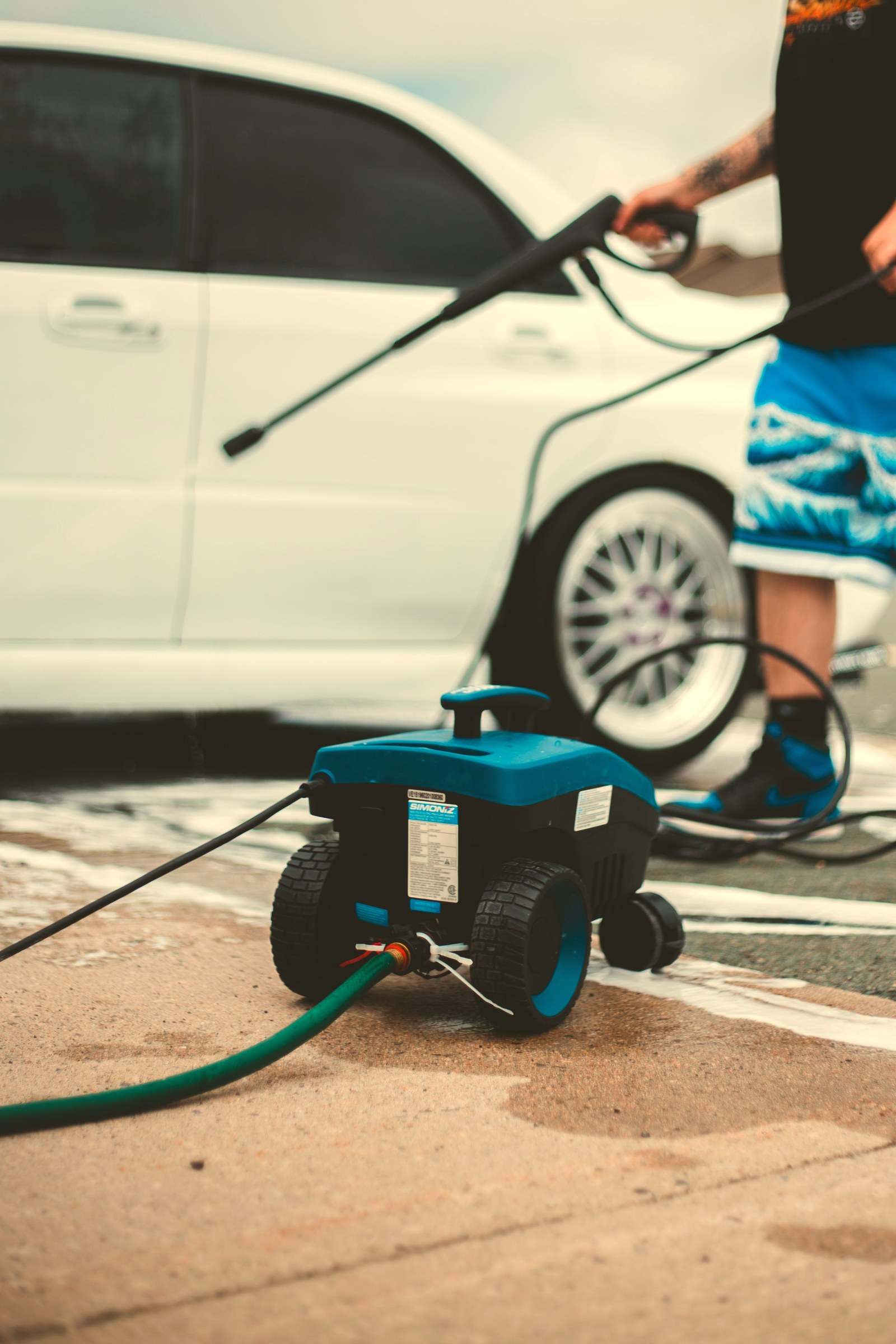
A good fit: cars and bikes (with a wide tip), patio furniture, a grill, siding with care, a deck with the right tip and distance, a modest driveway or walkway, garbage cans, and the worst of spring pollen.
A poor fit: stripping paint as a plan, opening up old oil-soaked farm concrete in one afternoon, or running 200 feet of hose from a weak indoor outlet. Electric washers also need a GFCI-protected circuit that will not trip the moment the motor loads.
If those heavier jobs are weekly, look at gas — and look at your neighbors and HOA rules while you are at it. Gas washers are louder and want more storage and maintenance. They also move water with an authority most electrics cannot match.
How we shortlisted
We favored machines that are widely available, easy to store, and honest about the jobs above. Exact model suffixes change; the classes stay useful: a compact ~2,000 PSI washer, an everyday mid-range around 2,000 PSI with better flow, and a cart-style 2,300 PSI-class unit for driveways.
Best electric for driveways: Ryobi 2,300 PSI class
A cart-style 2,300 PSI electric is the shortlist when the driveway is the main reason you are shopping. It will not feel like a gas unit. It will, with a surface cleaner and some patience, handle typical residential concrete. Look at hose length, wand storage, and whether the cart rolls where you actually need to park it.
Best everyday electric: Sun Joe SPX3001 class
This is the “first washer” shape a lot of households should buy: enough pressure for cars and outdoor furniture, a footprint you can hang or tuck, and a price that does not require a family meeting. It is the wrong tool for a long, stained lane. It is the right tool for most Saturday punch lists.
Best compact: Greenworks 2,000 PSI class
If storage is the constraint — a condo closet, a small garage already full of yard tools — a compact 2,000 PSI-class washer is the honest compromise. Lower flow means large pads take longer. Vehicles, a patio, and a set of chairs are right in its wheelhouse.
Use it like you mean to keep the house
Start with a wider tip than you think you need. Work a test patch. Keep the nozzle moving. On wood, stay farther back than feels necessary. On cars, soap and a wide fan beat a tight stream you will regret. When you are done, bleed the pressure, drain the pump as the manual asks, and do not let water sit in a pump that might freeze. If the machine will not come back to life in the spring, work the checklist in our starting guide before you assume the motor is finished.
An electric pressure washer is one of the few yard tools that makes the others look better: a clean mower deck, a readable patio, a driveway that no longer announces every oil spot. Buy the class that matches the surface you actually have, then spend the leftover money on a surface cleaner and a short, good hose — not on a PSI number you will only use once.
The lineup, compared
| Model | Pressure | Flow | Power | Best for | Typical price | Where to buy |
|---|---|---|---|---|---|---|
| Ryobi 2300 PSI Electric Pressure Washer Best electric for driveways | ~2,300 PSI class | ~1.1–1.2 GPM class | 13-amp electric | Driveways, siding, walkways | Typically $180–$280 | Check price |
| Sun Joe SPX3001 Electric Pressure Washer Best everyday electric washer | ~2,030 PSI class | ~1.8 GPM class | 14-amp electric | Cars, decks, light concrete | Typically $150–$220 | Check price |
| Greenworks 2,000 PSI Electric Pressure Washer Best compact electric | ~2,000 PSI class | ~1.1 GPM class | 13-amp electric | Patios, cars, tight storage | Typically $120–$200 | Check price |
Ryobi 2300 PSI Electric Pressure Washer
A step up in cleaning units for homeowners who want to wash a two-car driveway and still plug into a standard outlet. Look at wand storage, hose quality, and whether the cart rolls over your threshold.
- Pressure
- ~2,300 PSI class
- Flow
- ~1.1–1.2 GPM class
- Power
- 13-amp electric
- Best for
- Driveways, siding, walkways
Worth it for
- Higher pressure than compact “car wash” electrics
- Cart-style design is easier to move and store neatly
- Common at Home Depot with seasonal discounts
Think twice if
- Still limited by a household circuit and a water-in hose
- Onboard storage quality varies by exact model year
Sun Joe SPX3001 Electric Pressure Washer
A popular mid-range electric unit for cars, patio furniture, and modest driveways. It will not replace a gas machine on a farm lane, but it is the right size for most first-time buyers.
- Pressure
- ~2,030 PSI class
- Flow
- ~1.8 GPM class
- Power
- 14-amp electric
- Best for
- Cars, decks, light concrete
Worth it for
- Easy to store and start — just a GFCI outlet
- Enough pressure for vehicles, furniture, and light concrete
- Widely available and simple to service with common tips
Think twice if
- Not a heavy-duty driveway or paint-stripping tool
- Electric units need a quality 15-amp outdoor circuit
Greenworks 2,000 PSI Electric Pressure Washer
A compact 2,000-PSI-class washer for apartments with a patio, a single car, and limited storage. Buy it for convenience, not for stripping a barn.
- Pressure
- ~2,000 PSI class
- Flow
- ~1.1 GPM class
- Power
- 13-amp electric
- Best for
- Patios, cars, tight storage
Worth it for
- Smaller footprint than cart-style units
- Plenty of pressure for vehicles and outdoor furniture
- Usually quieter than a gas washer by a wide margin
Think twice if
- Lower flow means slower work on large concrete pads
- Accessory quality is the first thing to inspect
Free checklist
Get the yard-tool buyer checklist
A one-page checklist for mowers, trimmers, blowers and washers, plus a deal-watch sheet. We'll email it after you confirm, then a Thursday brief.
Reader questions
- Can an electric pressure washer clean a driveway?
- Yes, a mid-range electric unit around 2,000 to 2,300 PSI can clean a typical two-car driveway, especially with a surface cleaner attachment. It will be slower than a gas machine. It will also start with a plug and store in a small garage.
- What do PSI and GPM actually mean?
- PSI is pressure — how hard the water hits. GPM is flow — how much water arrives. Cleaning units are roughly PSI times GPM. A 2,000 PSI washer at 1.8 GPM can out-clean a 2,300 PSI washer at 1.1 GPM on broad surfaces.
- Will an electric washer strip paint or wash a car safely?
- It can damage paint, wood, and mortar if you use a tight tip too close. For cars, stay with a wide, lower-pressure tip, keep your distance, and use soap. Electric washers are generally easier to moderate than gas units, which is one reason they are a good first machine.
- Do I need a 3,000 PSI gas washer?
- Not for cars, patio furniture, a grill, or a modest driveway. Consider gas when you have long farm lanes, heavy oil staining, frequent large-surface work, or no practical access to a strong outdoor circuit.